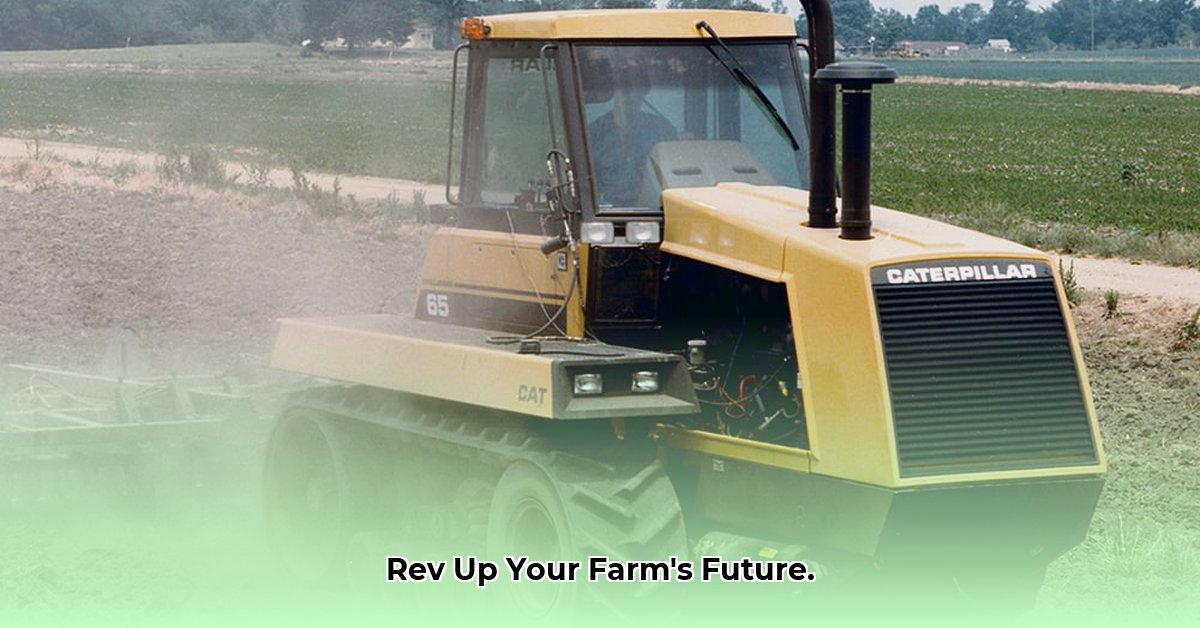
Cat Tractors and Sustainable Farming: A Powerful Partnership
Modern agriculture faces a critical challenge: producing more food while minimizing environmental impact. Caterpillar (Cat) tractors, renowned for their durability and power, play a significant role in this shift toward sustainable farming. But how effectively do these machines contribute to a greener future for agriculture? This article explores Cat's contribution to sustainable agriculture, analyzing their efficiency, the impact of integrated technologies, and the environmental considerations of their lifecycle. For more information on different types of tractors, check out this helpful resource: Tractor Types.
Cat Tractors and Sustainable Practices: Beyond Brute Strength
Cat tractors offer more than just sheer power; they're increasingly incorporating technology designed to enhance efficiency and reduce environmental impact. Their inherent reliability ensures long-term use, reducing waste from frequent replacements. Caterpillar's financing options also make upgrading to more efficient models accessible, further encouraging the adoption of sustainable technologies. This represents a dual investment – improving farm productivity while promoting environmental stewardship. How significant are these efficiency gains?
Analyzing Cat's Sustainability Claims: A Data-Driven Assessment
While Caterpillar promotes efficiency improvements, concrete data is crucial for a complete evaluation of their environmental impact. Claims of sustainability require rigorous substantiation – data on fuel efficiency improvements, greenhouse gas (GHG) emission reductions, and waste reduction rates are essential. Without this quantifiable data, sustainability claims remain incomplete. A comprehensive lifecycle assessment (LCA), encompassing the entire process from manufacturing to disposal, is necessary for a truly robust environmental evaluation. This holistic approach considers every stage, from raw material sourcing to recycling, offering a more accurate assessment of the true environmental impact. What specific data points are currently lacking in Cat's public disclosures?
Technological Advancements: Precision and Resource Optimization
Modern Cat tractors utilize advanced technologies that optimize farm operations and minimize environmental impact. Precision GPS guidance systems minimize overlaps, reducing fuel consumption and maximizing efficiency. Soil sensors enable targeted fertilizer application, reducing waste and improving yield. This precision farming approach drastically reduces resource use, translating to significant environmental benefits and cost savings for farmers. Can these technologies truly achieve the promised impact reductions?
Environmental Impact Assessment: A Holistic View
Evaluating the environmental impact extends beyond operational efficiency; it encompasses the entire product lifecycle. Manufacturing processes, material sourcing practices, and end-of-life management all play a significant role. Transparency regarding material sourcing—including the use of recycled and renewable materials—is crucial. Furthermore, a clear plan for equipment disposal and recycling is essential for minimizing waste and mitigating environmental harm at the end of the tractor's life. What specific steps is Caterpillar taking to enhance transparency in these areas? What are the current limitations?
Actionable Steps: A Collaborative Approach to Sustainability
Achieving meaningful progress requires a collaborative effort among all stakeholders.
For Farmers:
- Explore financing options: Caterpillar's financing programs can facilitate upgrading to more fuel-efficient and technologically advanced models.
- Conduct thorough ROI analyses: Evaluate the long-term economic and environmental benefits of investing in advanced tractor technologies.
- Prioritize preventative maintenance: Regular maintenance extends equipment lifespan, reducing the need for premature replacements.
- Adopt precision farming: Implementing GPS and sensor technologies can noticeably reduce resource use and enhance yields.
- Explore renewable energy: Integrating renewable energy sources on farms reduces reliance on fossil fuels.
For Caterpillar:
- Publish comprehensive LCAs: Transparent and independently verified LCAs provide crucial data for evaluating environmental performance.
- Share detailed emission data: Publicly release data on fuel efficiency and GHG emissions for all tractor models.
- Expand sustainable offerings: Invest in and market electric or hybrid tractor options to reduce reliance on fossil fuels.
- Partner with renewable energy providers: Collaborate to offer integrated renewable energy solutions for farming operations.
- Implement robust end-of-life programs: Develop effective recycling and reuse programs for end-of-life equipment to minimize waste.
For Government Agencies:
- Incentivize sustainable technology adoption: Offer grants and subsidies to encourage farmers to adopt sustainable technologies.
- Invest in agricultural research: Support research into environmentally responsible farming practices and technologies.
- Strengthen environmental regulations: Implement regulations to reduce emissions and promote sustainable waste management.
- Enhance rural infrastructure: Support infrastructure development to facilitate the transition to renewable energy in rural areas.
Conclusion: Building a Sustainable Future for Agriculture
The transition to sustainable agriculture requires a collective commitment. Cat tractors, through technological innovation and responsible manufacturing practices, can be vital partners in this transition. However, the journey toward a greener future for agriculture demands continued collaboration, transparent data sharing, and ongoing innovation from all stakeholders.